Chapter 6 Economic interactions and their outcomes
1987 Great Salt Lake & 2021 Great Salt Lake.
6.1 Economic interactions: Miracle or menace?
Imagine that you’ve received an email with a job offer. At your new job, you need to fit the dress code.
You go to a local mall and buy some new clothing. Let’s say you need a shirt. Across the world, millions of people do the same. Here’s what’s amazing: neither you nor any of the other millions of people shopping for new clothes told anybody about their plans beforehand.
The shirt you bought, though simple, represents a triumph of worldwide cooperation. The cotton comes from India, grown from seeds developed in the United States. Researchers in Portugal developed the artificial threads. Many countries made the dyes. The collar lining comes from Brazil. The machines used for weaving, cutting, and sewing were made in Germany. The shirt was finally put together, or “made in”, Malaysia.
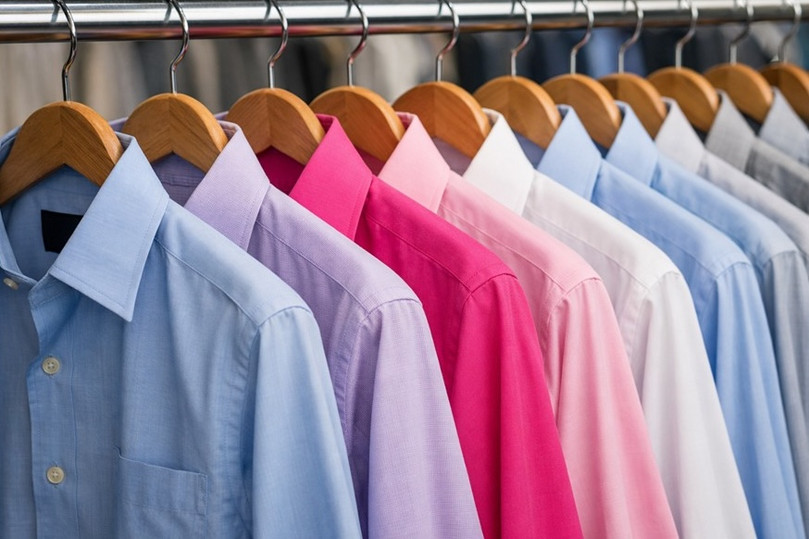
A rack of colorful shirts.
Image generated using ChatGPT (OpenAI) image generation on 27 July 2026 from the prompt: Generate an illustration of a rack of men’s office shirts in various pastel colors.
As people pursue their objectives, they unknowingly coordinate their activities. Nobody sat down and planned the coordination; you didn’t tell farmers in India that you wanted the shirt made from the cotton they grow. Instead, people around the world follow signals from market prices and take actions that benefit people via the production process.
Such coordinated action, in which people specialize and exchange, yielding mutually beneficial outcomes, reminds us of the gains from cooperation between the Worker and Bunker in Chapter 1 and Chapter 2. People pursuing their goals can achieve mutually beneficial outcomes. At the same time, in many situations, people face conflicts of interest and may struggle to align them. Specifically, too many people may follow their own self-interest and, in doing so, risk ruin for everyone. As we documented in Chapter 3, people’s actions worldwide lead to tragedies such as global climate change.
Consider another such tragedy: the shrinking of the Great Salt Lake in Utah. Why is the lake drying up? More people have moved to Utah recently, and they need access to water. In their production, businesses use water from rivers that feed the lake, reducing the water available for the lake. Climate change continues to make Utah’s weather more volatile and hotter on average, which accelerates the evaporation of the lake’s water.
The consequences of the Great Salt Lake drying up completely would be devastating for human and other animal populations. Utah policymakers disagree on which policies to adopt and who should bear their costs. Farmers don’t want to stop using the river water that feeds the lake because it would reduce their profits. Utah residents with good jobs there would rather not move away, and they need water for everyday use. Climate change is a global phenomenon that the government of Utah cannot control, but it can encourage people and businesses to adapt to its effects.
Everyday Economics 6.1
As one Utah lawmaker, who lives just north of the lake, said, “We have this potential environmental nuclear bomb that’s going to go off if we don’t take some pretty dramatic action.”1 The lakebed has arsenic in the sand, which will turn the air in the valley poisonous if the lake’s dust gets caught in windstorms that blow poisonous clouds into populated areas. The insect, fish, and bird populations will die off, and firms will shut down when they can no longer use river water to fuel their production. Utah’s agricultural production would end because its fruits and vegetables would be unfit for human consumption. Use online tools (such as the AI you use most often) to find and verify similar examples of social dilemmas in which governments struggle to determine how best to design policies to address them.
- social dilemma
- A situation in which actions taken independently by individuals in pursuit of their own private objectives result in an outcome which is inferior to some other feasible outcome that could have occurred if people had acted together, rather than as individuals.
The drying up of the Great Salt Lake is an example of a social dilemma. Social dilemmas occur when people do not adequately account for the effects of their actions on others, whether those effects are positive or negative.
In this chapter, we use the tools of game theory to model social interactions in which people’s decisions affect other people and themselves. Sometimes people can achieve outcomes that are mutually beneficial, and sometimes they achieve outcomes that are mutually detrimental. We look at when and why social dilemmas arise, as in the cases of climate change and the drying up of the Great Salt Lake. We return to a theme we introduced in Chapter 5: evaluating the outcomes of games as efficient or inefficient, fair or unfair.
Exercise 6.1 The hidden journey of a product: Specialization, cooperation, and social dilemmas
Think about a product you buy regularly. How is that product the result of specialization and cooperation across multiple people or countries? Make a list of its components and try to determine where each came from. For inspiration, watch the video of the essay “I, Pencil,” which documents how a pencil came to be, or the TED Talk “How I Built a Toaster—from Scratch” by Thomas Thwaites. Once you have your list, ask yourself: Could any step in that production chain give rise to a social dilemma—that is, a situation in which individual self-interest might lead to a worse outcome for everyone? Explain your reasoning.
-
Christopher Flavelle. 2022. “The Great Salt Lake Is Drying Up. Soon It Could Be a Disaster”. The New York Times. 7 June. ↩

