Chapter 12 The firm and its customers: Demand, costs, and profits
Beer selection at a local supermarket. Craft brewers produce differentiated products. Each craft brewer produces beer that stands apart from other beers, whether through flavor, brewing methods, or the values and mission of the business.
12.1 Introduction: Decisions, decisions, decisions
Since 2006, craft beer has been the fastest-growing segment of the beer market, with the number of craft breweries in the United States increasing by almost seven times, as shown in Figure 12.1.
- product market
- The markets where goods or services are sold to households, other firms, and governments.
Craft beer is an example of a product market because a good is sold to buyers.
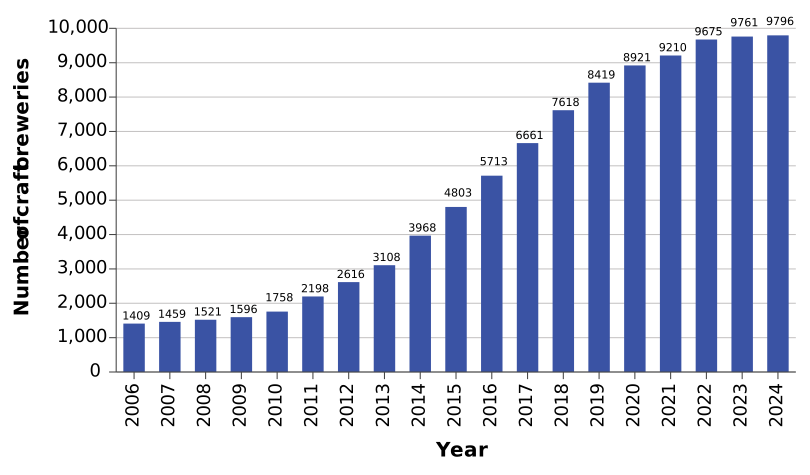
Figure 12.1 Number of craft breweries operating in the United States, 2006–2024.
Brewers Association. 2025. National Beer Sales & Production Data. April 15. Retrieved August 1, 2025.
What decisions can the owners of firms make?
Imagine that you are considering starting a business and competing in the craft beer market. As an entrepreneur you’ll need to make a series of important decisions such as the types of beer you want to produce and how to develop unique, high-quality recipes that will set your beer apart from other craft beers. Next, you’ll need to determine the brewing equipment and processes that best suit your production goals. You’ll also need to decide how many workers to hire and how much to pay them. Finally, you will need to decide how much beer to produce and the price at which you will sell your beer. Figure 12.2 illustrates many of the decisions you’ll need to consider as a craft brewer.
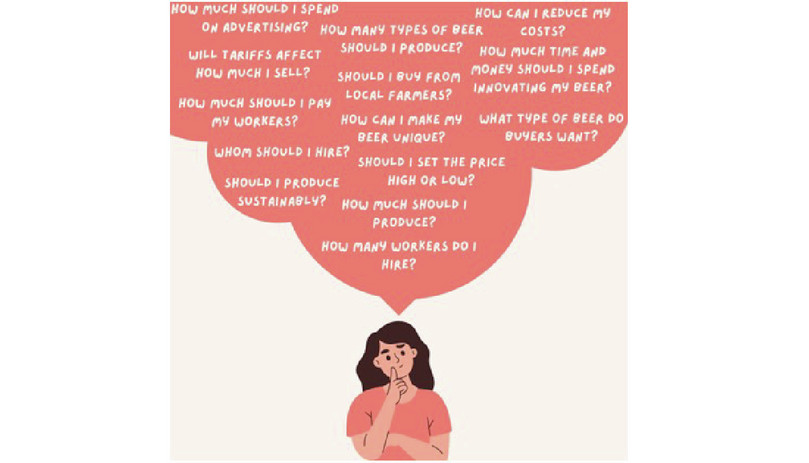
Figure 12.2 Decisions that craft beer business owners make.
- interdependence principle, principle of interdependence
- The outcomes people obtain in economic interactions depend on the actions that they and others take in response to each other and on what they believe about the future.
The decisions you make as a business owner are influenced by several other players, such as buyers, workers, other craft beer producers, and the government. The interdependence principle introduced in Chapter 1 reminds us that our choices and outcomes depend not only on what we do, but also on what others do. For example, tariffs on finished steel products raise the cost of steel beer kegs for craft brewers.
Everyday Economics 12.1
- firm
- An economic organization in which private owners of capital goods hire and direct labor to produce goods and services for sale on markets to make a profit.
When you think of a firm, what comes to mind? An entrepreneur such as Elon Musk? A brand logo such as the Apple icon? Members of the board sitting around a large table? Workers on the factory floor? A firm is not a single person. Rather, it is a collection of people, including workers, supervisors, managers, and shareholders. Most of these people do not have the authority to make the firm’s decisions. When we say, “The firm does something,” we mean that the firm’s owners or managers decide what to do.
- differentiated product
- A differentiated product is a product with some unique characteristics compared to similar products produced by other firms.
Entering the craft beer market means joining thousands of small and independent brewers, each producing differentiated products. That is, every craft brewer produces beer that stands apart from the other beers, whether through flavor, brewing methods, or the values and mission of the business. Some buyers may be drawn to a beer for its distinct taste, while others may want to support a brewery because of its commitment to sustainability and the community. The result is a diverse and ever-expanding selection of craft beer options.
- profits
- A firm’s profits are the difference between its total revenue and total costs, including opportunity costs.
This chapter explores how firms generate profits. Firms do the best they can to maximize their profits, which determine the wealth of owners or shareholders.
How the owners of firms do the best they can
- short run
- The term does not refer to a specific length of time, but instead to what happens while some things (such as prices, wages, capital stock, technology, or institutions) are assumed to be held constant (they are assumed to be fixed, or exogenous). For example, the firm’s stock of capital goods may be fixed in the short run, but in the longer run the firm could vary it (by selling some, or buying more).
While most firms try to earn the highest profits they can in the short-run, they may have other objectives too. In Chapter 1, we saw that Bunker Hill did the best it could by maximizing profits and choosing not to install emissions-reducing filters because doing so would have increased its costs and reduced its profits. In contrast, some firms, such as Sierra Nevada Brewing Co., aim for a level of profitability that minimizes environmental harm while keeping the business sustainable. Other companies use their profits to promote social good. For instance, Patagonia, which sells outdoor clothing and gear, donates 100% of its profits to environmental causes, and Optimax, an optics manufacturer, redistributes 25% of its profits to employees each month. These examples highlight how firms differ in what they value.
Case Study Extension 12.1 Triple Bottom Brewing
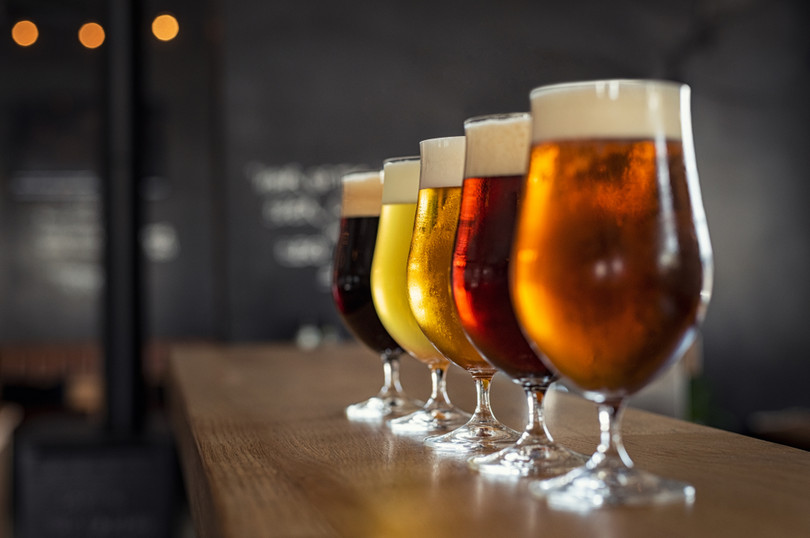
Glasses containing different sorts of craft beer.
In terms of people, Triple Bottom partners with local nonprofit organizations to hire workers who have overcome homelessness or incarceration. It pays a living wage and offers all its workers paid time off and parental leave. In her research paper “Innovation in the 21st Century: Architectural Change, Purpose, and the Challenges of Our Time”, economist Rebecca Henderson explains that when firms are driven by goals that go beyond maximizing immediate profits, they create shared values, meaning, and identity for everyone in the firm, which translates into happier, more productive, and more creative workers.
In terms of the planet, Triple Bottom closely tracks its use of resources, uses renewable energy to power its brewery, and recycles its spent grain. Given the large amount of energy used in the processing, packaging, and refrigeration of beer, investing in renewable energy to power a brewery may help keep utility costs low down the road. To this end, Triple Bottom uses wind-powered energy.
Triple Bottom appeals to buyers who not only demand high-quality beer but also prefer to purchase sustainably produced products. Research shows that beer drinkers are willing to pay more for sustainably produced beer. In their study “Willingness to Pay for Sustainable Beer”,1 Sanya Carley and Lilian Yahng found that 59% of the beer drinkers they surveyed were willing to pay US$1.30 more on average for a sustainably produced six-pack of their favorite beer (that is, beer produced using equipment that conserves energy and water and limits greenhouse gas emissions).
Triple Bottom illustrates how firms attempt to balance profits with their commitments to the social and environmental concerns they share with their buyers and workers. Can such firms perform well? Research shows they can. In their study “Corporate Sustainability: A Strategy?”2 researchers Ioannis Ioannou and George Serafeim show how firms can establish a competitive advantage by adopting sustainability strategies. They find that firms that adopt unique, sustainable actions that are distinct from their competitors’ actions exhibit greater financial performance, such as higher profits.
To learn more about how sustainable business models can translate into higher profits, watch this short video with Ioannis Ioannou.
In his book Purpose and Profit: How Businesses Can Lift Up the World, George Serafeim3 explains that reconciling profits with purpose requires long-term thinking, short-term sacrifice, and risk-taking. Breweries such as Triple Bottom make sacrifices now to pay their workers more and install energy-efficient equipment. The goal is to create productive workers, lower production costs, minimize negative environmental impacts, and provide beer drinkers with a product on which they place a high value.
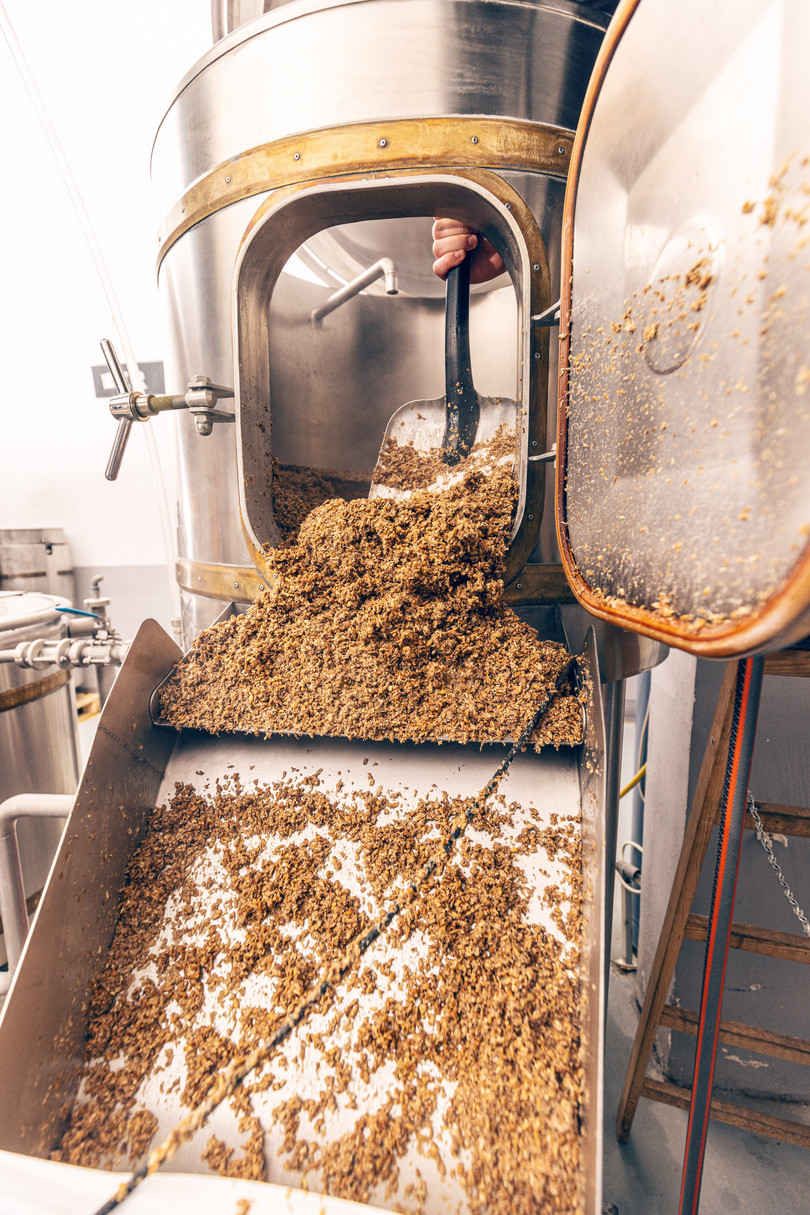
The recent increase in craft beer production has an environmental impact. In addition to being both water- and energy-intensive, the brewing process generates large amounts of liquid and solid wastes, such as spent grain (illustrated here), which is the unused material collected during the beer-making process. The Brewers Association, representing American brewers, reports that it takes seven kegs (barrels) of water to produce just one keg of craft beer.
- the principle of doing the best you can
- Doing the best you can means that, from the set of actions available to them, people will choose the action that they believe will result in the outcome that they value the most, taking into account what they believe the other player will do in response to their choice.
In Chapter 1, we learned that doing the best you can means choosing the action that you believe will lead to the outcome you value most, based on what you expect others to do in response. As a brewery owner, you’ll need to decide what price to charge and how much beer to produce in order to earn the highest possible profit.
Suppose that after consulting with friends who own and operate breweries, you identify three potential pricing strategies: a high price, a medium price, or a very low price. Figure 12.3 summarizes these three hypothetical pricing options, along with the potential profits you might earn under each strategy.
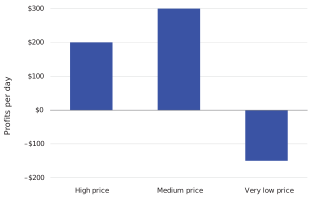
Figure 12.3 Hypothetical pricing strategies and associated profits.
After speaking with other brewery owners, you assume that you could charge a very low price and earn a loss, charge a high price and earn a positive profit, or charge a medium price and earn an even higher profit.
- the principle of doing the best you can
- Doing the best you can means that, from the set of actions available to them, people will choose the action that they believe will result in the outcome that they value the most, taking into account what they believe the other player will do in response to their choice.
The figure shows that following the very-low-price strategy is a bad option because you will lose money. While you could choose the high-price strategy, which generates positive profits, you also see that the medium-price strategy yields even higher profits, which better aligns with the doing the best you can principle. So, should you simply move forward with the medium-price strategy?
No. Basing your pricing decision on conversations with your brewer friends may be unreliable because your beer differs from theirs. You may earn higher profits or lower profits than they do because of differences in product features, demand, and production methods (costs). What other breweries do is important because your customers can buy goods from those breweries instead of yours. Because your products are differentiated, your customers’ willingness to pay for your beer may differ from their willingness to pay for your competitors’ beers. As we will see in this chapter and explore even more in the next chapter, firms’ decisions are shaped by a range of other players, including buyers, workers, other craft beer producers, and the government.
Everyday Economics 12.2
Have you started a business or thought about starting a business? Or, do you know anyone who has started a business? What was or would be your purpose or motivation? What decisions would you have to make? How do you decide what price to charge and how much to produce? What will earning profits allow you to do?
What should you do? To decide how much beer to sell and at what price, you first need to understand how much potential buyers are willing to pay for your product. Knowing what buyers value can help you determine the right price to charge and the right quantity to produce. But price and quantity decisions also depend on costs. A key strategy to earn as much profit as possible is to keep costs low, so we will explore the different types of costs firms face and how they influence pricing and production decisions.
Data Extension 12.1 The rise of B Corporations
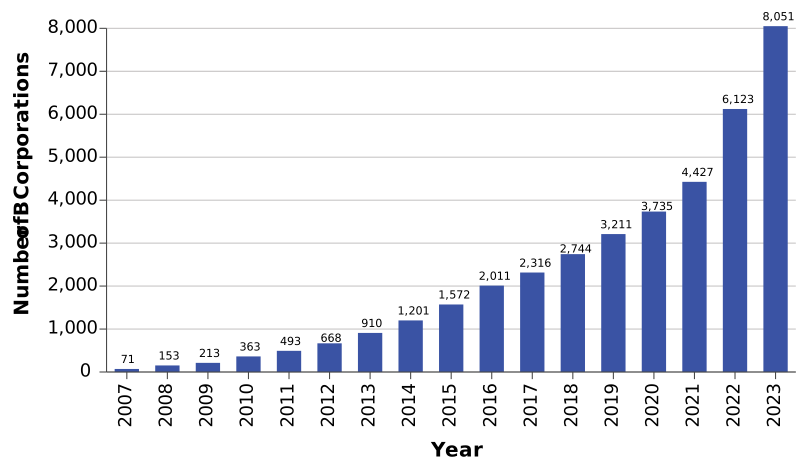
Figure E12.1 Rise in B Corporations.
B Lab Global Annual Report, 2023.
According to the B Lab, the organization responsible for certifying B Corporations, firms must demonstrate “high social and environmental performance,” “make a legal commitment by changing their corporate governance structure to be accountable to all stakeholders,” and “exhibit transparency by allowing information about their performance measured against B Lab’s standards to be publicly available on the B Corp profile.” Stakeholders are any individuals, groups, or entities that can affect or are affected by a firm’s operations, products, or decisions. For example, buyers, workers, and the environment are considered stakeholders.
The certification process depends on the firm’s size and structure, with each firm completing a B Impact assessment, which contains roughly 200 questions. Firms that earn a score of 80 or higher (out of 200) can submit their B Impact assessment for review. Once a firm has submitted the relevant documents and its score has been verified by the B Lab’s independent standards advisory council, it can sign the B Corp agreement. For small to medium-sized firms, the verification process can take up to 8 months, with a longer verification process for larger firms. Firms awarded B Corp certification pay an annual fee ranging from $500 to $50,000 based on region and the firm’s size and structure. Firms must update their B Impact score every 3 years (or after a change in ownership) to maintain certification.
Certified B Corporation logo
Everyday Economics 12.3
Have you ever participated in a boycott? That is, have you ever stopped purchasing certain brands or products because you were dissatisfied with the company? Why did you boycott the product or brand? For example, were you concerned about its ethical or environmental actions? Did you disagree with its political views, lack of diversity, or controversial advertising campaigns? Or perhaps the company stopped making your favorite style or flavor?
Both small firms such as Olipop (a producer of prebiotic soda that employs around 100 workers) and large firms such as Danone (a food and beverage company, with more than 6,000 workers) can use the B Corp certification to signal to buyers and workers their authentic commitment to social and environmental issues. A strong signal may be important because an estimated two-thirds of Americans engage in at least one product boycott each year (Glickman, 2009).4 Buyers who attempt to align their values with the product they purchase may engage in boycotts if firms do not follow through with their sustainability commitments.
Exercise 12.1 Balancing Profit and Purpose
Identify a real-world company that attempted to balance profitability with social or environmental goals. Who were the main stakeholders? What decisions did the company make, and what were the outcomes?
Question 12.1
Which of the following entities satisfies the definition of a firm? Choose all that apply.
- Elon Musk is a person. A single person alone doesn’t represent the firm.
- The board of directors plays an important role, but it alone does not represent the firm.
- A collection of people, including workers, supervisors, managers, and shareholders. All these individuals represent the firm.
- A union leader helps workers to gain more bargaining power, but does not represent the firm.
-
Samantha Carley and Lisa Yahng. 2018. “Willingness-to-Pay for Sustainable Beer”. PLoS ONE 13(10): e0204917. ↩
-
Ioannis Ioannou and George Serafeim. 2019. “Corporate Sustainability: A Strategy?” Harvard Business School Working Paper no 19-065. January. Revised April 2021. ↩
-
George Serafeim. 2022. Purpose and Profit: How Business Can Lift Up the World. HarperCollins Leadership. ↩
-
Lawrence B. Glickman. 2009. Buying Power: A History of Consumer Activism in America. University of Chicago Press. ↩

